Sustainability strategy SWISS
As Switzerland’s leading air carrier, SWISS focuses on environmental issues as part of its wide-ranging sustainability strategy.
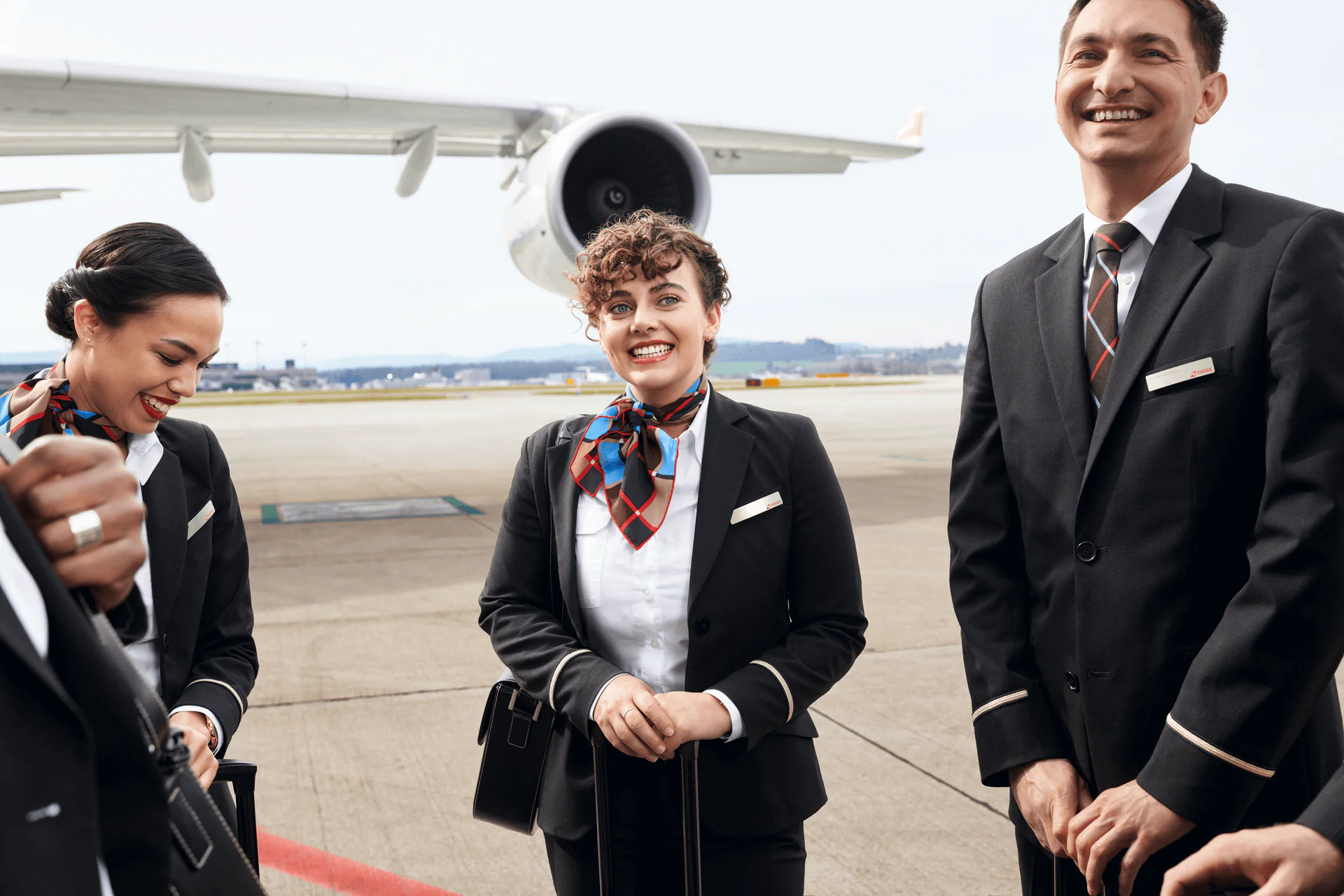
Flying connects people, nations and cultures, and enables global trade and exchanges. A world without air transport would be inconceivable today. But with the huge importance that the air transport sector carries comes a great responsibility, too. As Switzerland’s leading air carrier, SWISS is well aware of these responsibilities towards the environment and future generations, and firmly focuses on environmental issues and considerations as part of its wide-ranging sustainability strategy. Decarbonizing aviation is a significant challenge for the industry and requires the development and scaling up of numerous new technologies. SWISS and the Lufthansa Group are implementing comprehensive measures that contribute to lower-carbon air transport. These include fleet renewal, Sustainable Aviation Fuels (SAF) and operational efficiency measures, supplemented by investments in high-quality climate protection projects and CO2 removal.
Sustainable Aviation Fuel (SAF)
One important lever that contributes to lower-carbon air transport is the use of Sustainable Aviation Fuel (SAF). Sustainable Aviation Fuel is produced from renewable energy sources, such as used cooking oils and fats or from agricultural waste. While SAF emits a similar amount of CO₂ emissions during combustion as conventional kerosene, its lifecycle greenhouse gas emissions are at least 80% lower. SAF currently represents less than 1% of total aviation fuel used worldwide and costs about three to five times more than fossil fuel. This is why SWISS is working actively, through targeted measures and collaborations, to drive the development and expand the availability of SAF together with the Lufthansa Group, its partners and its customers.
Options for CO2 savings in air travel via SAF and climate protection projects when flying to/from Switzerland
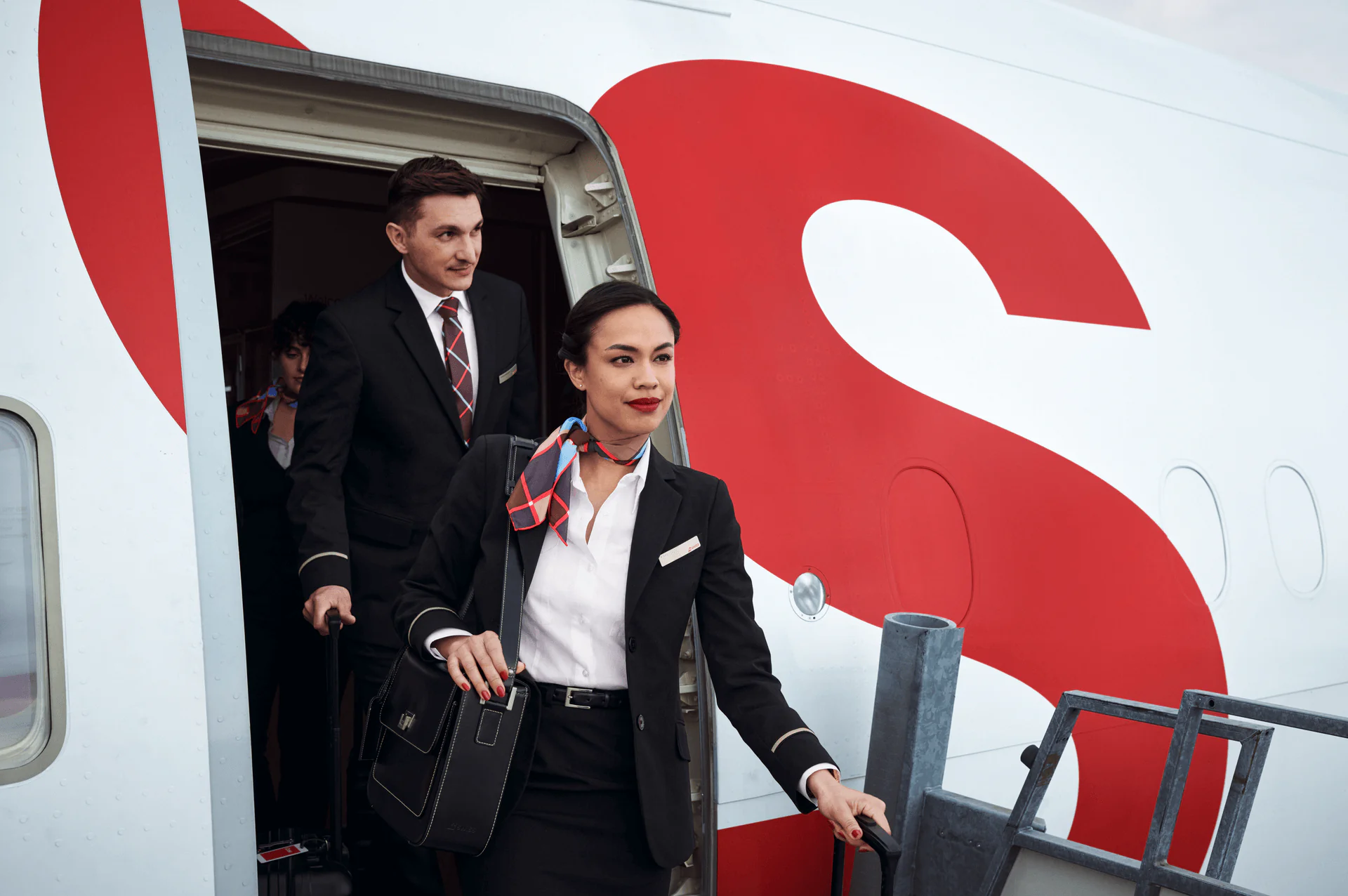
SWISS offers its customers various options to contribute to reducing the climate impact of future flights. This is achieved through the use of Sustainable Aviation Fuel (SAF). Additionally, passengers support selected climate protection projects. Combined, this contribution corresponds to the estimated CO₂ emissions of the respective flight.
Strong partnership: Synhelion
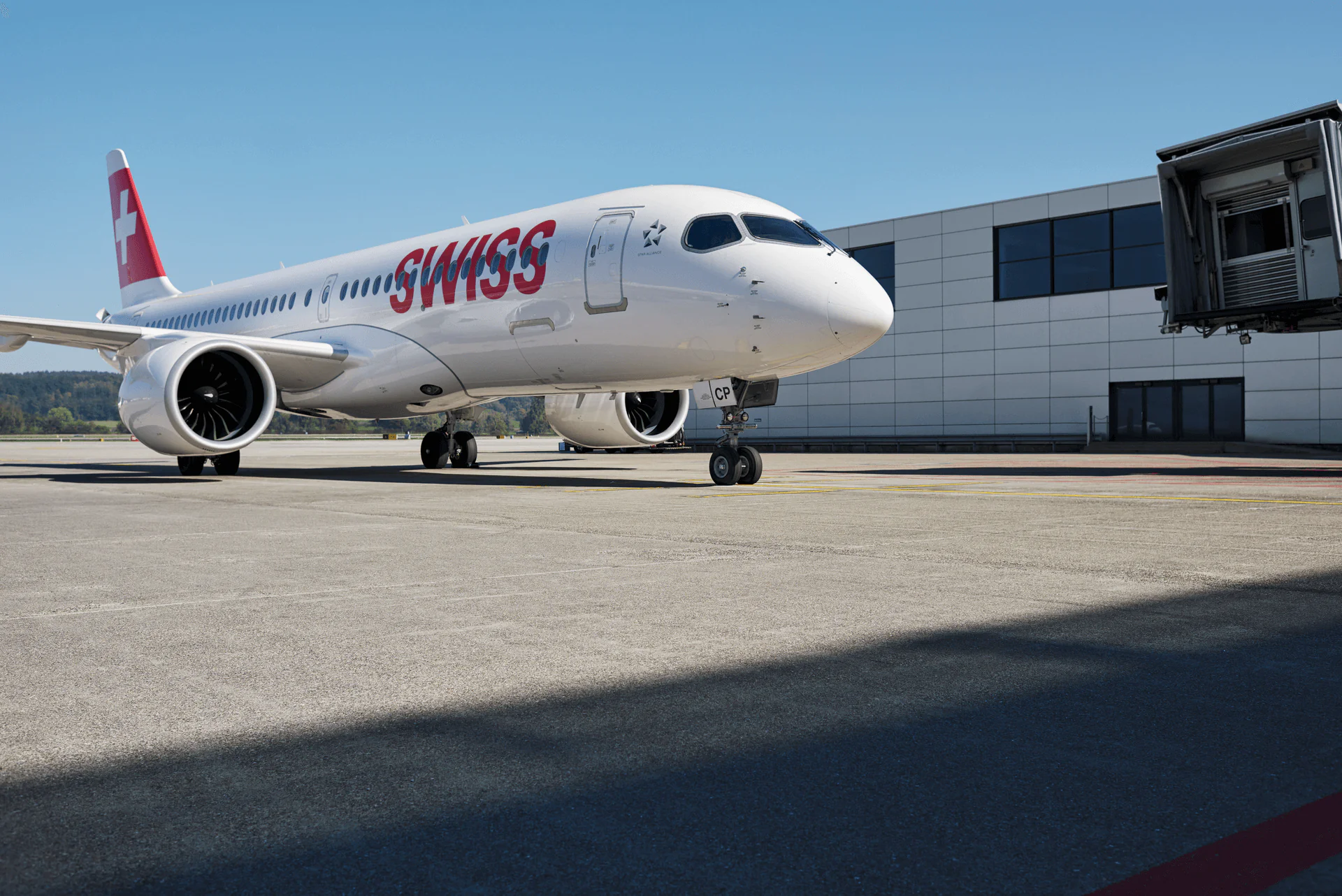
Flying with kerosene made from sunlight. Currently, biofuels are only available in limited quantities. In view of this, SWISS is promoting the development of so-called solar fuels. Therefore, the airline has established a strategic collaboration with the Swiss cleantech company Synhelion, a pioneer in the sustainable solar fuel field. This will make SWISS the first airline in the world to use ‘sun-to-liquid’ fuel.
Strong partnership: Climeworks
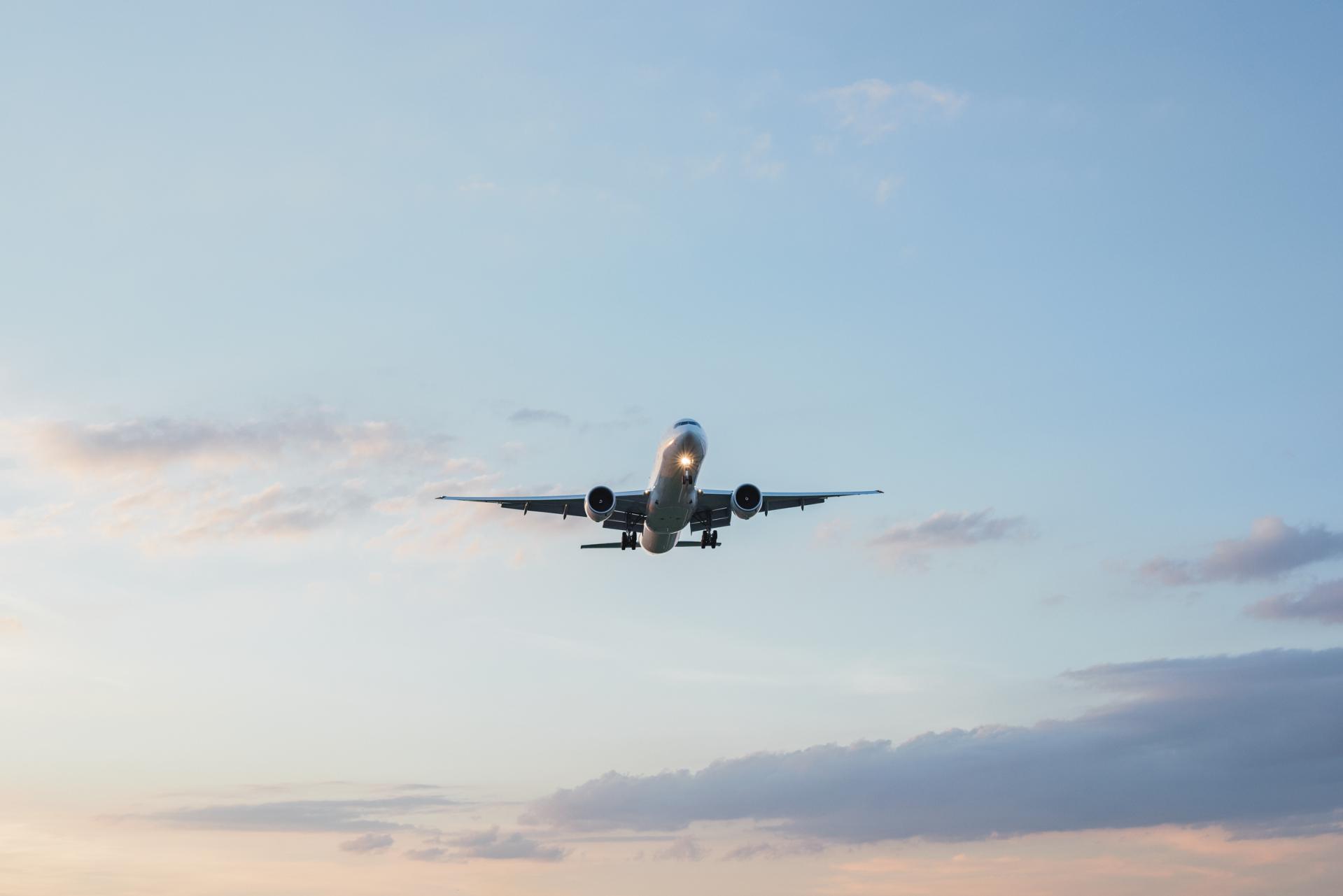
SWISS has entered a partnership with the Swiss SAF technology company Metafuels. Metafuels has developed a process that efficiently converts green methanol into Sustainable Aviation Fuel. The technology enables the flexible use of different feedstocks, including both bio-methanol and e-methanol, and is inherently scalable. The synthetic SAF produced can be used within existing infrastructure and today’s aircraft fleets. This agreement strengthens the commercial development of its technology and the long-standing commitment of SWISS to innovative Swiss solutions.
Strong partnership: Metafuels
SWISS has entered a partnership with the Swiss SAF technology company Metafuels. Metafuels has developed a process that efficiently converts green methanol into Sustainable Aviation Fuel. The technology enables the flexible use of different feedstocks, including both bio-methanol and e-methanol, and is inherently scalable. The synthetic SAF produced can be used within existing infrastructure and today’s aircraft fleets. This agreement strengthens the commercial development of its technology and the long-standing commitment of SWISS to innovative Swiss solutions.
Innovation: AeroSHARK
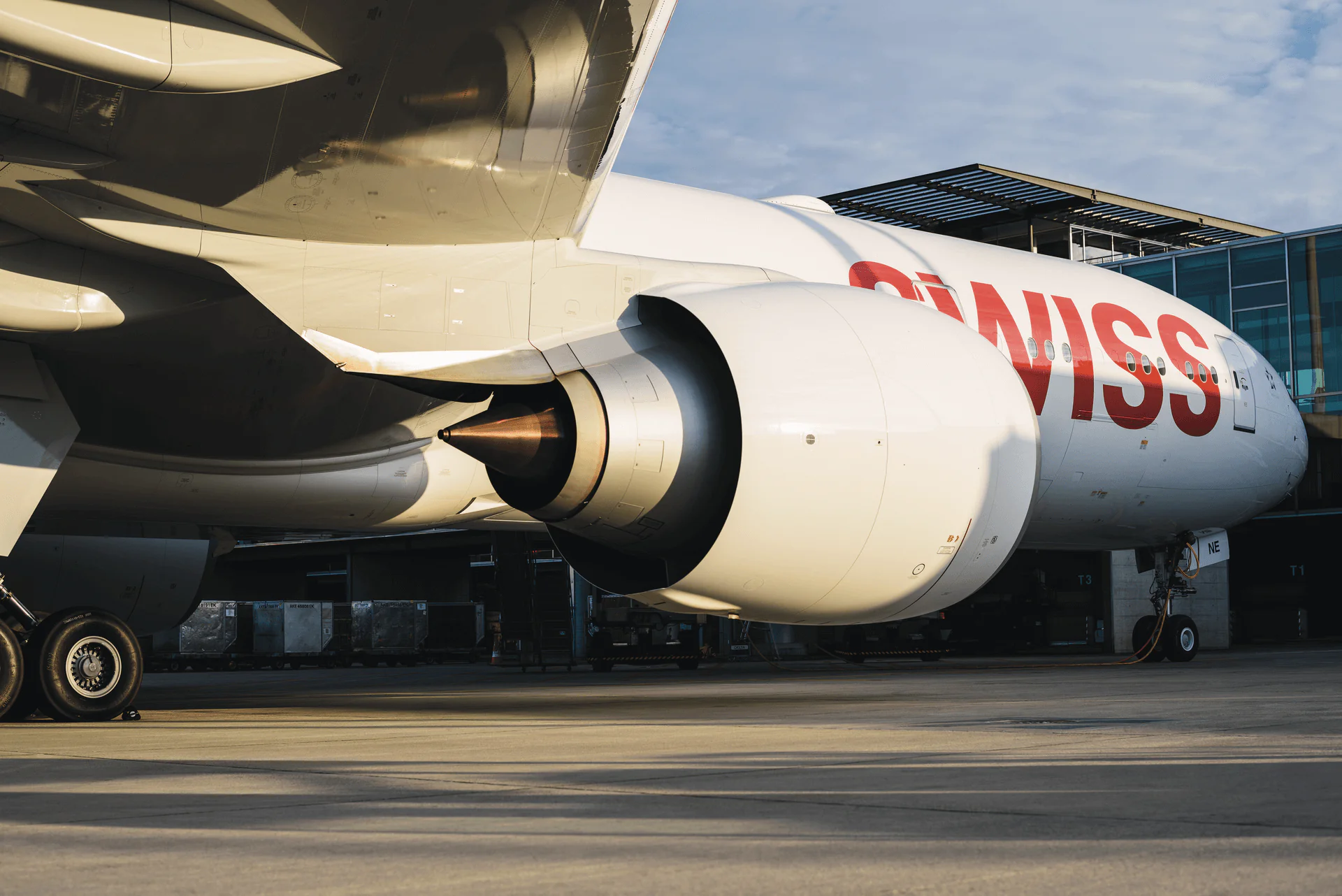
Inspired by shark skin SWISS became the first passenger airline in the world to deploy the innovative so-called AeroSHARK technology on all its Boeing 777 aircraft. It’s a transparent film that features millions of ‘riblets’ – small protrusions just 50 micrometres high – which has been applied to the aircraft’s fuselage and engine nacelles. It replicates the hydrodynamic skin of a shark to reduce aerodynamic drag and, as a result, lower both inflight fuel consumption and carbon dioxide emissions.
Continuous Fleet Renewal
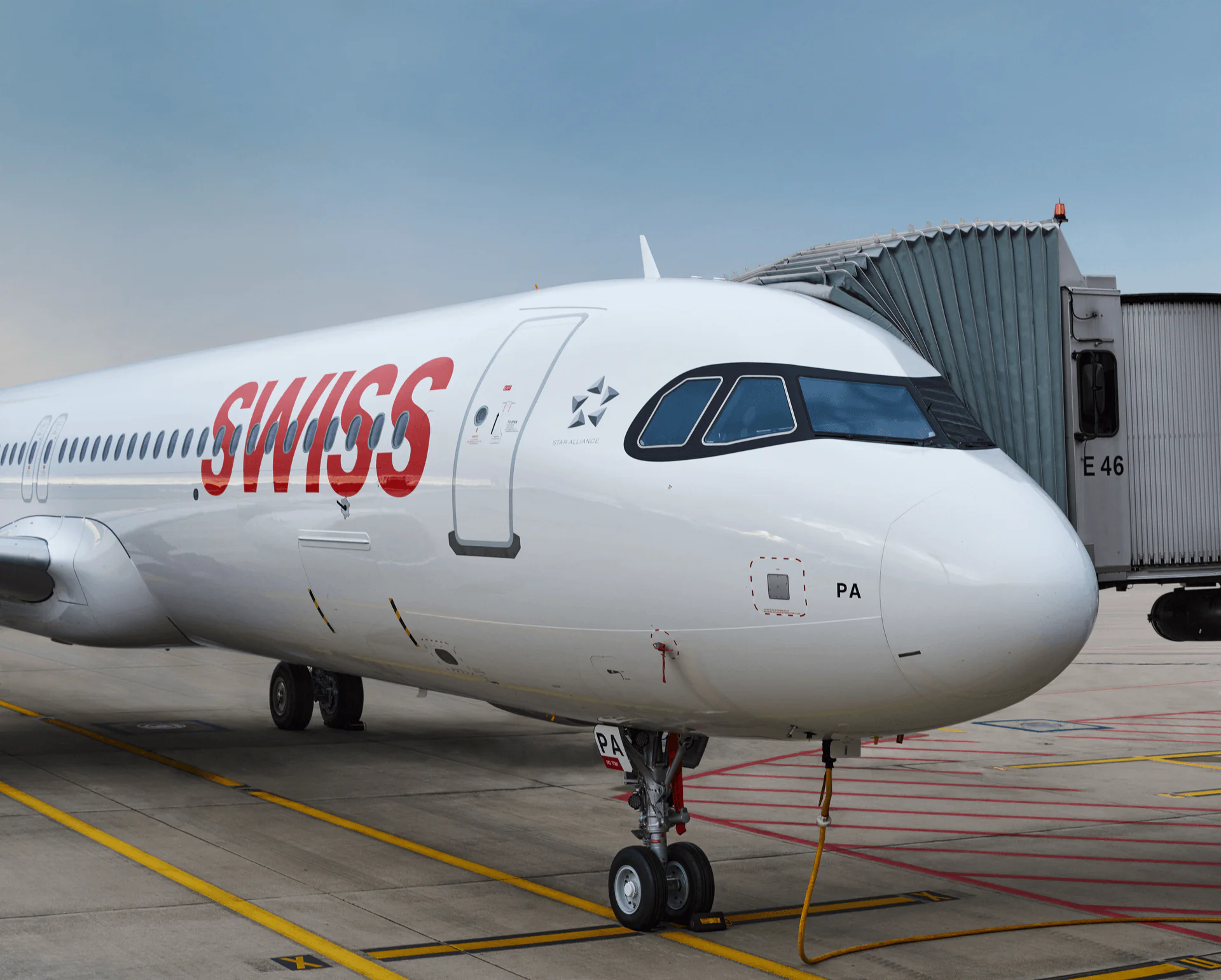
Continuous investment in modern and particularly fuel-efficient aircraft and engine technologies are an important lever for reducing emissions from flight operations. SWISS operates a modern aircraft fleet and continuously invests in its renewal. On short-haul the airline operates a model of the newest generation with the Airbus A220. The most modern technologies were used in engines, systems and materials in its development. The fuel savings of approx. 25% compared to its predecessor sets new benchmarks in terms of cost-effectiveness and environmental sustainability. In the Airbus A320 fleet, the older aircraft are being gradually replaced by the modern A320neo, which help to achieve fuel savings of approx. 20%. Fleet renewal also continues in the SWISS long-haul fleet with the introduction of the state-of-the-art Airbus A350.